Datawave Marine Solutions
  • Dms Logo
  • Services
    • Vessel Design
      • Concept Design
    • Naval Architecture
    • Advanced Analysis
    • Marine Systems
    • Civil Engineering
  • Marine Operations
    • Passenger Vessels
    • Work Boats
    • Research Boats
    • Shipyards
    • Marine Startups
    • Waterway Maintenance
    • Autonomous Vessels
  • Portfolio
  • About Us
  • Resources
    • Blog
    • GHS Tutorials
    • FAQs
  • Contact
  • Menu Menu

Autonomous Surface Vessels: Is an ASV the Right Tool for Your Operation?

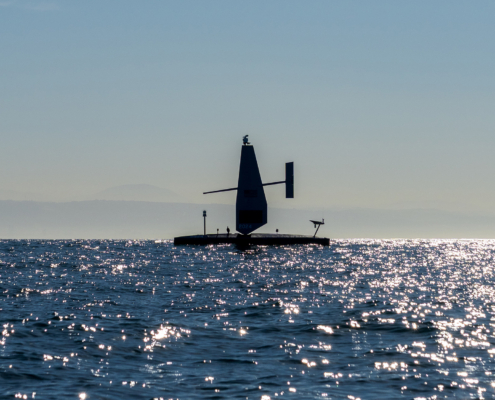
Autonomous surface vessels have crossed from experimental to operational. Marine drones and unmanned platforms are being deployed today on real missions including survey work, environmental monitoring, port security, infrastructure inspection. The technology has matured enough that the question is no longer whether ASVs work. The question is whether one is the right tool for your specific operation.

Let’s help you answer that question:

What an Autonomous Surface Vessel Actually Is

An autonomous surface vessel is an unmanned watercraft capable of operating on the surface without a person physically onboard. That definition covers a wide spectrum from remotely operated platforms where a human operator maintains real-time control, to fully autonomous systems that execute a mission from launch to recovery without human input.

Most real-world deployments sit somewhere between those poles. The vessel may navigate autonomously but require human authorization for certain decisions. It may operate independently within a defined area but maintain a communications link for monitoring and override.

The core components are consistent across the category: a hull and propulsion system, a navigation and control system, a sensor suite appropriate to the mission, and a communications architecture that defines how and by how much the vessel stays connected to an operator or shore station. Each of those components has design implications that matter well before any autonomy software gets involved.

Where ASVs Are Being Used Today

The operational use cases for autonomous surface vessels have expanded significantly over the past decade. The clearest applications today include:

  • Hydrographic survey and seabed mapping: persistent, methodical coverage of survey areas without crew fatigue affecting data quality
  • Environmental monitoring and water quality sampling: repeated transects in fixed areas, often in conditions or locations where crewed vessels are impractical
  • Port and harbor security: persistent patrol in defined areas, with sensor payloads for detection and monitoring
  • Hull and infrastructure inspection: close-proximity work around fixed assets where crew safety is a concern
  • Search and rescue support: forward deployment of communications relay, lighting, or flotation equipment ahead of crewed response assets
  • Marine drone operations: ASVs serving as forward launch and recovery platforms for aerial or underwater drones, extending their operational range offshore

That last application is growing quickly. As aerial and subsea marine drones become more capable, the need for a mobile offshore base (one that can be positioned closer to the work area than a crewed support vessel) has made ASVs an increasingly practical part of multi-domain operations.

Where ASVs Genuinely Outperform Crewed Vessels

There are specific mission profiles where an autonomous surface vessel delivers real, meaningful advantages over a crewed alternative.

  • Endurance on repetitive missions: A crewed vessel needs crew rotations, rest periods, and the logistical overhead that comes with keeping people at sea. An ASV can run a survey grid or monitoring transect for hours without any of that overhead, and do it with consistent precision.
  • Risk elimination in hazardous environments: Inspecting a structure in close proximity to breaking waves, operating in an area with unexploded ordnance, or conducting reconnaissance in a security context — these are missions where removing the crew from the equation has direct safety value.
  • Access to restricted areas: Shallow draft, small footprint ASVs can operate in water depths and confined spaces that no crewed vessel can safely reach. For nearshore survey work, estuary monitoring, or inspection of shallow infrastructure, this is a genuine capability advantage.
  • Data consistency: On survey missions especially, removing crew fatigue from the equation improves data quality. An ASV follows its programmed track without the variability that comes from human operators working long shifts.

Evaluating an ASV for your operation? DMS can help you work through the mission requirements and vessel design from the ground up.

Schedule a Free Consultation

Where ASVs Fall Short and Why That Matters

Most content on autonomous surface vessels undersells the limitations. That doesn’t serve operators well. Here’s an honest look at where the technology has real constraints.

Sea State and Weather Restrictions

Smaller ASV platforms operate in a narrower weather window than crewed vessels of equivalent size. When conditions deteriorate and there’s no crew to make real-time judgment calls, and recovery of a disabled vessel in heavy weather is a serious logistical problem.

Communications Dependency

Autonomous operation still depends on communications architecture. Loss-of-link scenarios need to be planned for explicitly: what does the vessel do if it loses contact with the operator? The answer to that question has to be designed in, not assumed.

Regulatory Complexity

The regulatory framework for autonomous vessels is still developing. USCG requirements, right-of-way rules under COLREGS, port authority restrictions, and jurisdiction-specific rules all apply — and in many cases weren’t written with unmanned platforms in mind. Compliance requires active engagement, not a checkbox.

Payload Constraints

Smaller platforms have real limits on what they can carry. Sensor suites, power systems, communications equipment, and any mission-specific payload all compete for space and weight budget. Undersizing the platform for the mission is one of the most common early design errors.

Public Perception and Maritime Right-of-Way

An unmanned vessel operating in busy waterways will encounter other mariners who don’t know what it is or how it will behave. That’s an operational and safety consideration that doesn’t show up in a spec sheet.

The Design Questions That Determine Whether It Actually Works

Choosing to deploy an ASV is only the first decision. The vessel underneath the autonomy stack is what determines whether the system actually performs in real conditions. This is where the real engineering work begins.

The questions that matter at the design stage:

  • What sea state does the vessel need to operate in reliably, and does the hull form match that requirement?
  • What endurance and range does the mission actually demand, and how does propulsion sizing affect both?
  • How are sensors mounted and positioned to deliver usable data quality — not just presence on the vessel, but integration into the hull and structure in a way that doesn’t compromise the sensor output?
  • What redundancy is required for autonomous operation, and how are failure modes handled?
  • What does regulatory compliance require from the vessel design itself, and is that built in from the start?

These questions don’t get resolved by the autonomy software vendor. They get resolved by naval architects and marine engineers who understand how vessels behave in real sea states and who treat the autonomous platform as a vessel first, a technology platform second.

Build Something That Works in the Real World

If you’re developing an ASV for a specific mission or evaluating whether autonomous operation is the right fit, DMS brings the naval architecture and marine engineering background to help you build something that works in the real world.

Share This Post

  • Share on Facebook
  • Share on X
  • Share on WhatsApp
  • Share on Pinterest
  • Share on LinkedIn
  • Share on Tumblr
  • Share on Vk
  • Share on Reddit
  • Share by Mail

More Like This

How Gyro Stabilization Works

How Gyro Stabilization Works and Why It’s Changing the Way We Experience the Water

Vessel Design
https://dmsonline.us/wp-content/uploads/2026/04/How-Gyro-Stabilization-Works.jpg 1250 2000 Abstrakt Marketing /wp-content/uploads/2025/06/DMS-logo.svg Abstrakt Marketing2026-04-30 08:50:162026-06-01 10:09:14How Gyro Stabilization Works and Why It’s Changing the Way We Experience the Water
Which Ship Stabilization System Is Right For Your Boat

Gyro Stabilizers vs. Fin Stabilizers vs. Bilge Keels: Which Ship Stabilizer Is Right for You?

Vessel Design
https://dmsonline.us/wp-content/uploads/2026/04/Which-Ship-Stabilization-System-is-Right-for-Your-Boat.jpg 1250 2000 Abstrakt Marketing /wp-content/uploads/2025/06/DMS-logo.svg Abstrakt Marketing2026-04-29 09:02:382026-06-01 10:09:14Gyro Stabilizers vs. Fin Stabilizers vs. Bilge Keels: Which Ship Stabilizer Is Right for You?
Future Mine Hunting System Comes To Clyde Mod Autonomous VesselLPhot Stevie Burke/MOD

Hybrid-Electric Systems: The Best Renewable Energy Option for Yachts?

Vessel Design
https://dmsonline.us/wp-content/uploads/2025/08/FUTURE_MINE_HUNTING_SYSTEM_COMES_TO_CLYDE_MOD_Autonomous-Vessel.jpg 1250 2000 Abstrakt Marketing /wp-content/uploads/2025/06/DMS-logo.svg Abstrakt Marketing2026-03-29 20:35:482026-06-01 10:09:15Hybrid-Electric Systems: The Best Renewable Energy Option for Yachts?
Reviewing The Most Affordable Vessel Designs For Startups On A Budget

Reviewing the Most Affordable Vessel Designs for Startups on a Budget

Vessel Design
https://dmsonline.us/wp-content/uploads/2026/02/Reviewing-the-Most-Affordable-Vessel-Designs-for-Startups-on-a-Budget.jpg 1250 2000 Abstrakt Marketing /wp-content/uploads/2025/06/DMS-logo.svg Abstrakt Marketing2026-02-03 07:32:352026-06-01 10:09:16Reviewing the Most Affordable Vessel Designs for Startups on a Budget
How Small Vessel Operators Can Transition To Hybrid Electric

How Small Vessel Operators Can Transition to Hybrid-Electric

Green Ship Design, Vessel Design
https://dmsonline.us/wp-content/uploads/2026/01/How-Small-Vessel-Operators-Can-Transition-to-Hybrid-Electric.jpg 1250 2000 Abstrakt Marketing /wp-content/uploads/2025/06/DMS-logo.svg Abstrakt Marketing2025-11-14 14:26:442026-06-01 10:09:18How Small Vessel Operators Can Transition to Hybrid-Electric
Ship Refit in Drydock

Why You Want an Upgrade: Major Ship Refits

Arrangements, Economics, Ship Motion Control, Ship Response, Vessel Design
https://dmsonline.us/wp-content/uploads/2025/08/ShipDrydock1-scaled.jpg 1920 2560 Nicholas Barczak /wp-content/uploads/2025/06/DMS-logo.svg Nicholas Barczak2025-10-21 07:00:002026-06-01 10:09:19Why You Want an Upgrade: Major Ship Refits
Facepalm

Pitfalls of a COI: Mistakes to Avoid when Getting a COI

Design Support, Support Services, USCG, Vessel Design
https://dmsonline.us/wp-content/uploads/2025/08/FacePalm.jpg 2048 2048 Nicholas Barczak /wp-content/uploads/2025/06/DMS-logo.svg Nicholas Barczak2025-09-16 07:00:002026-06-01 10:09:20Pitfalls of a COI: Mistakes to Avoid when Getting a COI
USCG Inspector

How to Get a COI: USCG Certificate of Inspection

Design Support, Legal, Support Services, USCG, Vessel Design
https://dmsonline.us/wp-content/uploads/2025/08/USCg-Inspector.jpg 2048 2048 Nicholas Barczak /wp-content/uploads/2025/06/DMS-logo.svg Nicholas Barczak2025-09-09 07:00:002026-06-01 10:09:20How to Get a COI: USCG Certificate of Inspection
How To Choose A Naval Architecture Firm

How to Choose a Naval Architecture Firm

Vessel Design
https://dmsonline.us/wp-content/uploads/2025/08/How-to-Choose-a-Naval-Architecture-Firm-.jpg 1250 2000 Abstrakt Marketing /wp-content/uploads/2025/06/DMS-logo.svg Abstrakt Marketing2025-08-22 15:11:072026-06-01 10:09:20How to Choose a Naval Architecture Firm
Previous Previous Previous Next Next Next

Categories

  • 3D Modeling
  • Arrangements
  • Auxiliary Systems
  • Command and Surveillance
  • Design Support
  • Drafting
  • Economics
  • Elastic Static Loading
  • Electrical
  • Energy Generation
  • Engineering Business
  • Equipment Integration
  • Fatigue
  • FEA / Numerical Methods
  • Fluid Dynamics
  • Fluid Loads
  • Fluids
  • Fluids Special Methods
  • Fluids Testing
  • Green Ship Design
  • Hiring Consultant
  • Hull Decks
  • Hull Structural Bulkheads
  • Hull Structure
  • Human Ergonomics
  • Hydrostatics
  • Insurance
  • Integration / Engineering
  • Legal
  • Marine Entrepreneurship
  • Masts, Kingposts, Service Platforms
  • Materials
  • Mechanical
  • Mechanical Handling Systems
  • Miscellaneous
  • Naval Architecture
  • Passenger Vessel
  • Piping
  • Production Engineering
  • Project Management
  • Propulsion
  • Propulsion Plant
  • Propulsion Units
  • Propulsor Shrouds and Ducts
  • Propulsors
  • Quality Assurance
  • Recreation
  • Regulations
  • Replenishment Systems
  • Resistance
  • Seakeeping / Fluid Structure Interaction
  • Shell and Supporting Structure
  • Ship Control Systems
  • Ship Maneuvering
  • Ship Motion Control
  • Ship Response
  • Shipyard And Support Services
  • Special Methods
  • Special Purpose Mechanical Systems
  • Special Purpose Structure
  • Stability Test
  • Structural
  • Support Services
  • Sustainable Marine Technology
  • Towing Tank
  • Transmission and Propulsor Systems
  • Unmanned Vessels
  • USCG
  • Vessel Design
  • Waterjet Propulsors

Our Socials

About Us

Ship designs tailored to your mission. Engineering that advances profits.

Dms Logo Negatives

What We Do

Vessel Design

Naval Architecture

Advanced Analysis

Marine Systems

Civil Engineering

Contact Us

(616) 504-1619

[email protected]

Website by Abstrakt Marketing Group ©
  • Privacy Policy
  • Sitemap
Scroll to top Scroll to top Scroll to top

This site uses cookies. By continuing to browse the site, you are agreeing to our use of cookies.

AcceptLearn more

Cookie and Privacy Settings


How we use cookies

We may request cookies to be set on your device. We use cookies to let us know when you visit our websites, how you interact with us, to enrich your user experience, and to customize your relationship with our website.

Click on the different category headings to find out more. You can also change some of your preferences. Note that blocking some types of cookies may impact your experience on our websites and the services we are able to offer.

Essential Website Cookies

These cookies are strictly necessary to provide you with services available through our website and to use some of its features.

Because these cookies are strictly necessary to deliver the website, refusing them will have impact how our site functions. You always can block or delete cookies by changing your browser settings and force blocking all cookies on this website. But this will always prompt you to accept/refuse cookies when revisiting our site.

We fully respect if you want to refuse cookies but to avoid asking you again and again kindly allow us to store a cookie for that. You are free to opt out any time or opt in for other cookies to get a better experience. If you refuse cookies we will remove all set cookies in our domain.

We provide you with a list of stored cookies on your computer in our domain so you can check what we stored. Due to security reasons we are not able to show or modify cookies from other domains. You can check these in your browser security settings.

Other external services

We also use different external services like Google Webfonts, Google Maps, and external Video providers. Since these providers may collect personal data like your IP address we allow you to block them here. Please be aware that this might heavily reduce the functionality and appearance of our site. Changes will take effect once you reload the page.

Google Webfont Settings:

Google Map Settings:

Google reCaptcha Settings:

Vimeo and Youtube video embeds:

Accept settingsHide notification only