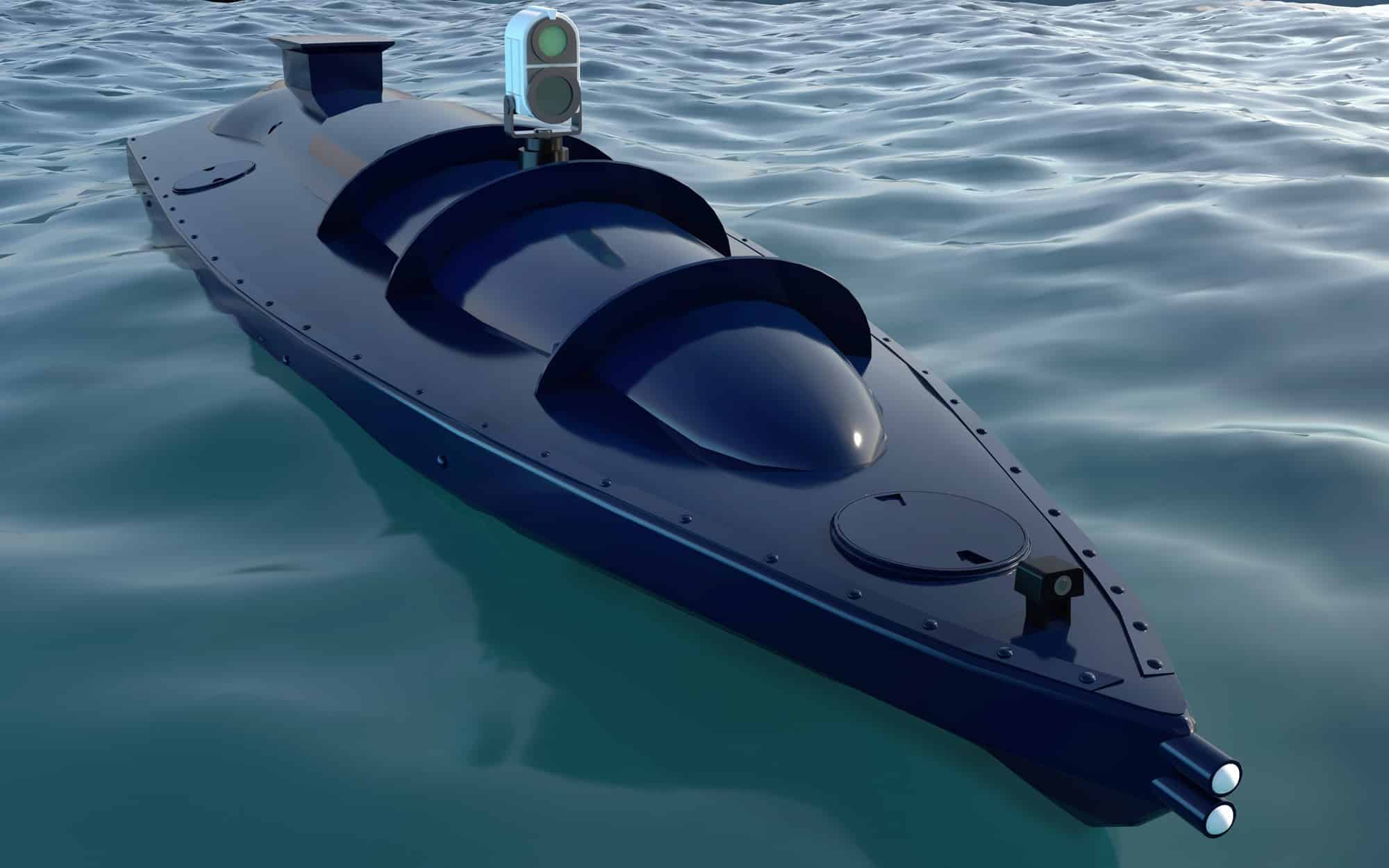
With stability and reliability addressed, attention turned to endurance. The client’s requirement was not just long range, but consistent, predictable performance without reliance on wind.
Rather than installing an oversized engine and hoping for the best, powering analysis was used to understand how the vessel behaved across its full speed range. The drone was capable of speeds exceeding 7 knots when required, but its true strength appeared at lower cruising speeds.
At peak efficiency, the performance numbers spoke for themselves:
- Over 80 days of continuous operation (theoretical)
- A maximum range exceeding 9,500 nautical miles (theoretical)
- Enough endurance to cross the Pacific Ocean (twice) on a single tank of fuel (theoretical)
This is where endurance ship design becomes a discipline of restraint. Efficiency came not from extreme measures, but from aligning hull form, propulsion, and operating profile around how the vessel actually moved through the water.
The vessel did not need favorable winds. It did not need support infrastructure. It simply kept going.