Datawave Marine Solutions
  • Dms Logo
  • Services
    • Vessel Design
      • Concept Design
    • Naval Architecture
    • Advanced Analysis
    • Marine Systems
    • Civil Engineering
  • Marine Operations
    • Passenger Vessels
    • Work Boats
    • Research Boats
    • Shipyards
    • Marine Startups
    • Waterway Maintenance
    • Autonomous Vessels
  • Portfolio
  • About Us
  • Resources
    • Blog
    • GHS Tutorials
    • FAQs
  • Contact
  • Menu Menu

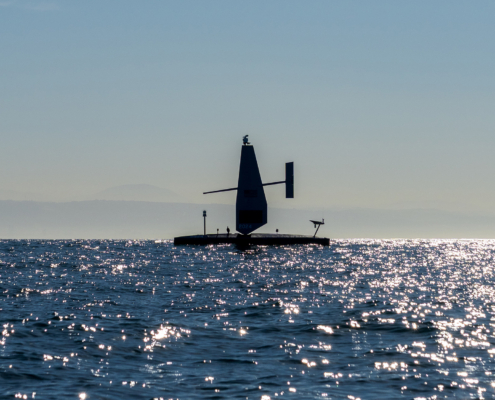
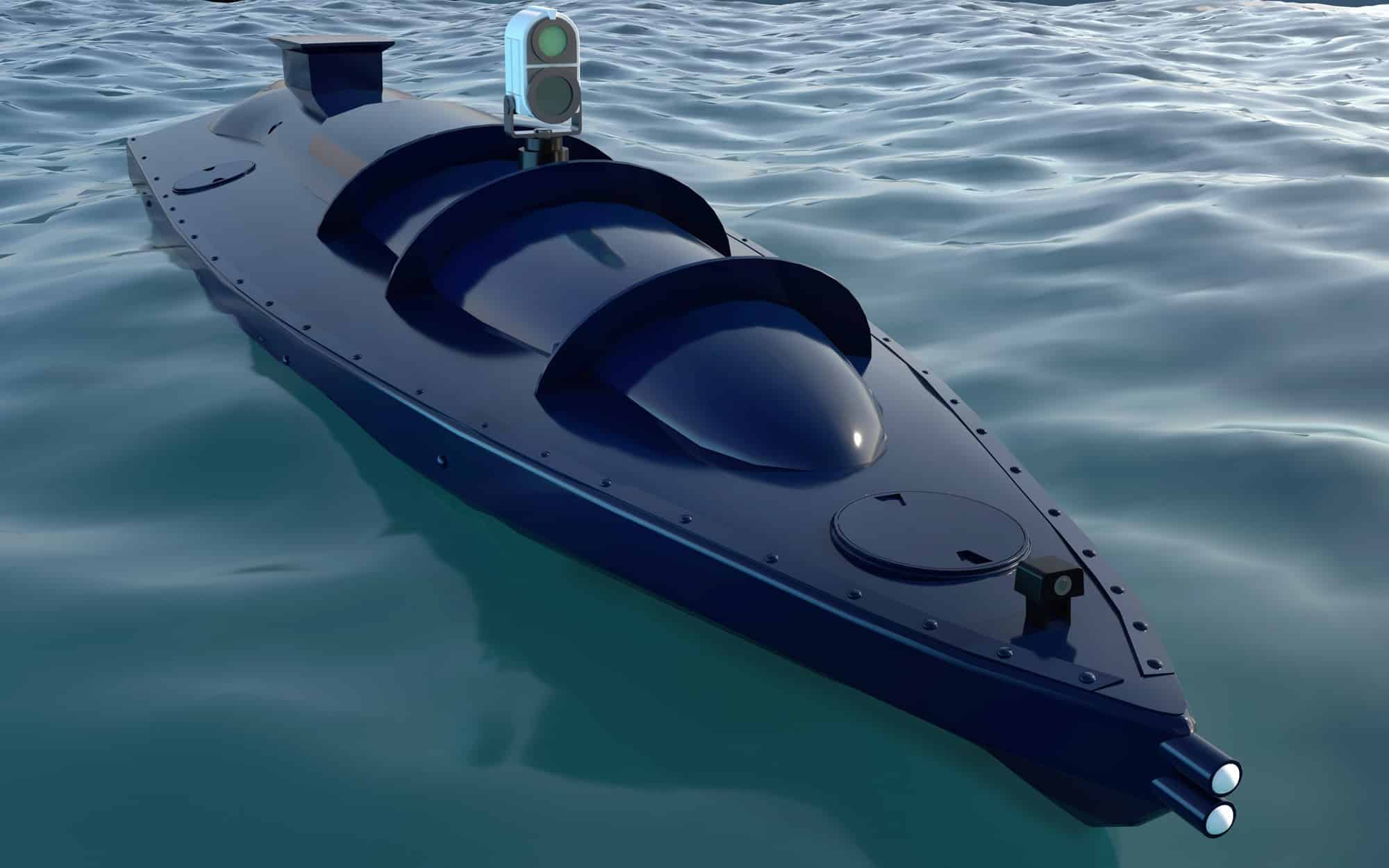
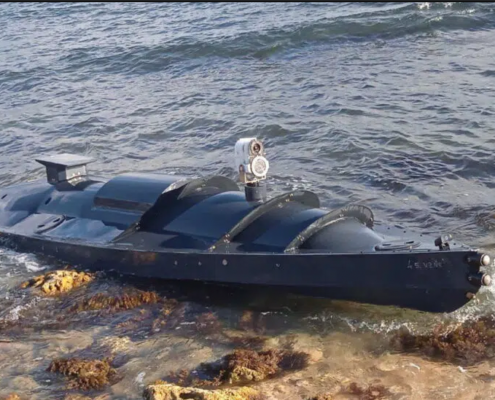
Exploring Our Unmanned Vessel Design That Survived the Pacific on One Tank of Fuel

Crossing the Pacific Ocean is a tall order for any vessel. Doing it with a small, unmanned platform raises the bar even higher. This case study explores how thoughtful design made that mission possible, and what it can teach developers working on long-endurance autonomous platforms today.

Exploring Our Unmanned Vessel Design That Survived The Pacific On One Tank Of Fuel

The Challenge: Long-Endurance Autonomy in an Unforgiving Environment

Our client set out to build a research drone capable of operating independently for months at sea. The mission profile included extended sonar surveys, specialized equipment, and operation across open-ocean routes where weather conditions could not be avoided or waited out.

Many long-range drones rely on wind or sail-assisted propulsion. That approach can work in the right conditions, but it introduces uncertainty. Wind does not always cooperate, and mission planners cannot afford to gamble on favorable weather patterns. For this project, the requirement was clear: full propulsion independence, predictable endurance, and high survivability in rough seas.

This meant solving several competing problems at once:

  • How to maximize range without oversizing the propulsion system
  • How to maintain stability in heavy seas with a small hull
  • How to ensure the vessel could tolerate system failures and keep going
  • The result needed to be efficient, resilient, and practical to operate over long deployments.

Designing for Reliability First

The foundation of this autonomous vessel engineering effort was redundancy. When a crew is not onboard, the vessel itself must be capable of absorbing failures without ending the mission.

The drone was designed with multiple layers of power and propulsion backup:

  • Redundant battery banks
  • A main engine capable of powering all vessel systems on its own
  • A dedicated backup generator
  • An azimuthing, retractable bow thruster that doubled as emergency propulsion

Protective unmanned vessel design choices mattered just as much as redundancy. Critical components like the bow thruster and cooling systems were shielded within the hull to prevent damage from debris or wave impact. Rather than relying on delicate appendages, the vessel was engineered to protect itself from the environment it would inevitably face.

This approach to drone naval architecture focused less on theoretical efficiency and more on real-world reliability.

Nearly Unsinkable by Design

Small autonomous vessels face a unique challenge: they operate in the same ocean as ships hundreds of times their size. Wave energy does not scale down just because the platform does.

From the beginning, stability and survivability were treated as mission-critical systems. The vessel was engineered to remain operational even when conditions pushed beyond what most small platforms could tolerate.

Key stability features included:

  • Full self-righting capability after capsize
  • The ability to continue operating with designated compartments flooded
  • Sufficient righting energy to recover from moderate breaking waves
  • Damage stability allowing any single compartment to flood without sinking

Roll motion was also carefully controlled. For a vessel conducting sonar surveys, excessive roll translates directly into degraded data quality and longer mission timelines. Through seakeeping analysis, roll behavior was predicted and minimized across rough sea states. The result was a platform that could continue collecting high-quality data when others would be forced to stand down.

Crossing the Pacific: Twice

With stability and reliability addressed, attention turned to endurance. The client’s requirement was not just long range, but consistent, predictable performance without reliance on wind.

Rather than installing an oversized engine and hoping for the best, powering analysis was used to understand how the vessel behaved across its full speed range. The drone was capable of speeds exceeding 7 knots when required, but its true strength appeared at lower cruising speeds.

At peak efficiency, the performance numbers spoke for themselves:

  • Over 80 days of continuous operation (theoretical)
  • A maximum range exceeding 9,500 nautical miles (theoretical)
  • Enough endurance to cross the Pacific Ocean (twice) on a single tank of fuel (theoretical)

This is where endurance ship design becomes a discipline of restraint. Efficiency came not from extreme measures, but from aligning hull form, propulsion, and operating profile around how the vessel actually moved through the water.

The vessel did not need favorable winds. It did not need support infrastructure. It simply kept going.
Why Motion Control Mattered to ROI

For autonomous research platforms, performance is not measured only in miles traveled. Data quality matters just as much.

The drone’s sonar system performed best when oriented vertically. Excessive roll would have required repeat survey passes, reducing coverage area and increasing mission time. By predicting vessel motion through seakeeping analysis, roll behavior was kept within acceptable limits even in rough conditions.

This had a direct impact on return on investment. Fewer repeat surveys meant faster data acquisition, lower operational costs, and greater confidence for potential buyers evaluating the platform’s real-world capability.

In this case, vessel motions went beyond safety. It became a commercial advantage.

Focused Engineering Where It Mattered Most

One of the most practical lessons from this project was how engineering effort was applied. The client had in-house capability for many aspects of development, but needed support in the areas that would make or break mission success.

Instead of delivering a fully engineered vessel from top to bottom, engineering was focused on specialized areas:

  • Stability and damage survivability
  • Seakeeping and motion prediction
  • Powering and endurance optimization

This targeted approach allowed the client to control costs while still gaining high-value insight where it mattered most. It is a reminder that effective autonomous vessel engineering does not always mean doing everything: it means doing the right things well.

What This Means for Unmanned Vessel Developers

So how was this drone able to cross the Pacific on one tank of fuel?

The answer is not a single breakthrough. It is the result of disciplined unmanned vessel design, grounded in physics, mission realities, and a deep respect for the ocean.

For developers working on their own platforms, the lessons are clear:

  • Endurance depends on survivability as much as efficiency
  • Redundancy and damage tolerance enable long missions
  • Motion control directly affects data quality and ROI
  • Powering analysis beats guesswork every time

Whether you are building survey drones, communications platforms, or long-endurance research vessels, improving endurance starts with understanding how the vessel truly behaves at sea.

Looking Ahead

Long-range autonomous vessels are no longer experimental curiosities. They are operational tools, and their success depends on careful integration of naval architecture, systems engineering, and performance analysis.

If you are exploring ways to improve endurance, survivability, or efficiency for an unmanned platform, this case study offers a clear example of what is possible when unmanned vessel design decisions are driven by real-world conditions instead of assumptions.

Share This Post

  • Share on Facebook
  • Share on X
  • Share on WhatsApp
  • Share on Pinterest
  • Share on LinkedIn
  • Share on Tumblr
  • Share on Vk
  • Share on Reddit
  • Share by Mail

More Like This

Categories

  • 3D Modeling
  • Arrangements
  • Auxiliary Systems
  • Command and Surveillance
  • Design Support
  • Drafting
  • Economics
  • Elastic Static Loading
  • Electrical
  • Energy Generation
  • Engineering Business
  • Equipment Integration
  • Fatigue
  • FEA / Numerical Methods
  • Fluid Dynamics
  • Fluid Loads
  • Fluids
  • Fluids Special Methods
  • Fluids Testing
  • Green Ship Design
  • Hiring Consultant
  • Hull Decks
  • Hull Structural Bulkheads
  • Hull Structure
  • Human Ergonomics
  • Hydrostatics
  • Insurance
  • Integration / Engineering
  • Legal
  • Marine Entrepreneurship
  • Masts, Kingposts, Service Platforms
  • Materials
  • Mechanical
  • Mechanical Handling Systems
  • Miscellaneous
  • Naval Architecture
  • Passenger Vessel
  • Piping
  • Production Engineering
  • Project Management
  • Propulsion
  • Propulsion Plant
  • Propulsion Units
  • Propulsor Shrouds and Ducts
  • Propulsors
  • Quality Assurance
  • Recreation
  • Regulations
  • Replenishment Systems
  • Resistance
  • Seakeeping / Fluid Structure Interaction
  • Shell and Supporting Structure
  • Ship Control Systems
  • Ship Maneuvering
  • Ship Motion Control
  • Ship Response
  • Shipyard And Support Services
  • Special Methods
  • Special Purpose Mechanical Systems
  • Special Purpose Structure
  • Stability Test
  • Structural
  • Support Services
  • Sustainable Marine Technology
  • Towing Tank
  • Transmission and Propulsor Systems
  • Unmanned Vessels
  • USCG
  • Vessel Design
  • Waterjet Propulsors

Our Socials

About Us

Ship designs tailored to your mission. Engineering that advances profits.

Dms Logo Negatives

What We Do

Vessel Design

Naval Architecture

Advanced Analysis

Marine Systems

Civil Engineering

Contact Us

(616) 504-1619

[email protected]

Website by Abstrakt Marketing Group ©
  • Privacy Policy
  • Sitemap
Scroll to top Scroll to top Scroll to top

This site uses cookies. By continuing to browse the site, you are agreeing to our use of cookies.

AcceptLearn more

Cookie and Privacy Settings


How we use cookies

We may request cookies to be set on your device. We use cookies to let us know when you visit our websites, how you interact with us, to enrich your user experience, and to customize your relationship with our website.

Click on the different category headings to find out more. You can also change some of your preferences. Note that blocking some types of cookies may impact your experience on our websites and the services we are able to offer.

Essential Website Cookies

These cookies are strictly necessary to provide you with services available through our website and to use some of its features.

Because these cookies are strictly necessary to deliver the website, refusing them will have impact how our site functions. You always can block or delete cookies by changing your browser settings and force blocking all cookies on this website. But this will always prompt you to accept/refuse cookies when revisiting our site.

We fully respect if you want to refuse cookies but to avoid asking you again and again kindly allow us to store a cookie for that. You are free to opt out any time or opt in for other cookies to get a better experience. If you refuse cookies we will remove all set cookies in our domain.

We provide you with a list of stored cookies on your computer in our domain so you can check what we stored. Due to security reasons we are not able to show or modify cookies from other domains. You can check these in your browser security settings.

Other external services

We also use different external services like Google Webfonts, Google Maps, and external Video providers. Since these providers may collect personal data like your IP address we allow you to block them here. Please be aware that this might heavily reduce the functionality and appearance of our site. Changes will take effect once you reload the page.

Google Webfont Settings:

Google Map Settings:

Google reCaptcha Settings:

Vimeo and Youtube video embeds:

Accept settingsHide notification only